
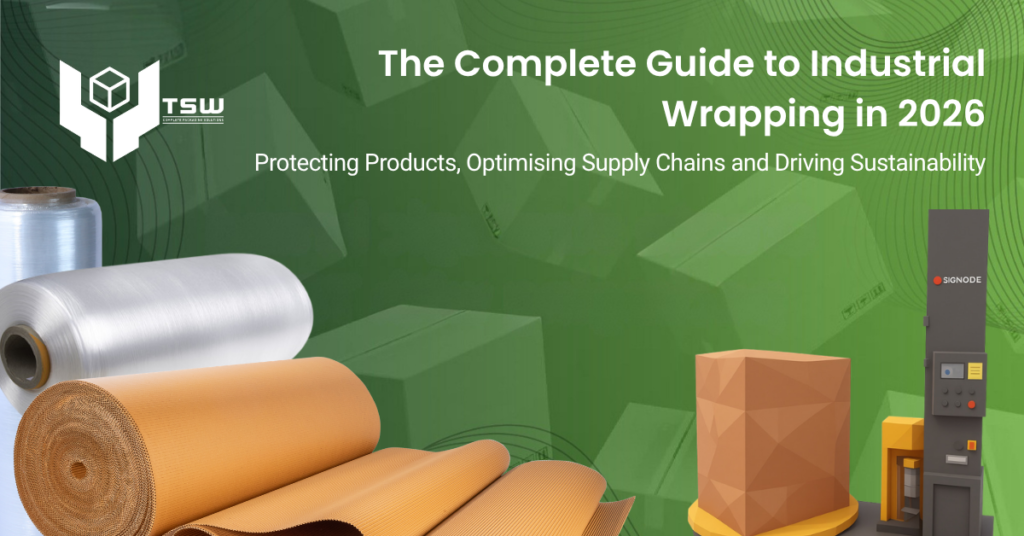
Why Industrial Wrapping is Critical for Modern Supply Chains
In today’s fast-moving logistics environment, businesses invest in automation, transportation and infrastructure – but often overlook one crucial factor: industrial wrapping.
Yet, studies show that 20–25% of transit damage is caused by poor packaging and load instability. That means inefficient wrapping isn’t just a packaging issue – it’s a direct financial risk.
Industrial wrapping acts as an “invisible shield”, ensuring your products:
- Reach customers safely
- Maintain quality
- Protect your brand reputation
For industries like automotive, engineering and FMCG, wrapping is no longer optional – it’s strategic.
What is Industrial Wrapping?
Industrial wrapping is the process of securing and protecting goods using materials such as:
- Stretch film
- Shrink film
- Bubble/foam/VCI wraps
Its core purpose is to:
- Stabilize pallet loads
- Protect against moisture, dust, and damage
- Enable safe handling and transport
Think of it as creating a secure cocoon around your product, ensuring zero compromise from warehouse to delivery.
Types of Industrial Wrapping
1. Stretch Wrapping – The Backbone of Pallet Stability
Best for: Palletised goods across industries
How it works: Elastic film stretches and contracts to tightly secure loads.
Key Benefits:
- Improves load stability by up to 40%
- Reduces transit damage
- Cost-effective for bulk operations
Advantage:
- Reduce film usage by 20-30%
- Achieve consistent wrapping quality
- Increase packaging speed significantly
2. Shrink Wrapping – Maximum Protection for Complex Loads
Best for:
- Heavy machinery
- Irregular shapes
- Export packaging
Key Benefits:
- Tight, tamper-proof sealing
- Excellent moisture and weather protection
Case Insight:
A machinery exporter reduced damage claims by 60% after switching to shrink wrapping for exports.
3. Flow Wrapping – High-Speed Packaging Efficiency
Best for: FMCG, pharma, and retail goods
Key Benefits:
- High-speed operations
- Consistent sealing
- Ideal for automation
4. Protective Wrapping – Cushioning & Corrosion Control
Includes: Bubble wrap, foam, VCI films
Key Benefits:
- Shock absorption
- Scratch prevention
- Rust protection (VCI up to 24 months)
Why Industrial Wrapping is a Business-Critical Investment
1. Damage Prevention
- Reduces product loss during transit
- Protects against environmental exposure
Companies using optimized wrapping see up to 50% fewer damage claims
2. Operational Efficiency
- Faster handling with forklifts
- Compatible with automated systems
- Reduces labour dependency
3. Theft & Tamper Protection
- Sealed loads discourage pilferage
- Improves supply chain security
4. Cost Optimization
- Lower product replacement costs
- Reduced material waste
- Improved logistics efficiency
Where TSW Packaging Solutions Adds Real Value
Most companies struggle not with what wrapping is – but with how to implement it effectively.
1. Automated Wrapping Systems
- Inconsistent tension
- Higher film usage
- Slower operations
- Automatic & semi-automatic wrapping machines
- Consistent wrapping quality
- Faster throughput
2. Complete Packaging Solutions (360° Approach)
Unlike traditional vendors, TSW offers:
- End-to-end packaging system design
- Integration with case sealers & conveyors
- Process optimization across the line
Result: Higher efficiency + lower operational cost
3. Customized Industry Solutions
TSW designs wrapping strategies based on:
- Product type
- Transit conditions
- Cost vs protection balance
Example:
- Automotive – VCI + heavy-duty wrapping
- Engineering – shock + moisture protection
- FMCG – speed + standardization
Sustainability in Industrial Wrapping (2026 Trends)
Sustainability is now driven by regulations and cost pressures.
Key Innovations:
Recyclable & Bio-Based Films
- 100% recyclable materials
- Reduced environmental impact
Performance (Pre-Stretch) Films
- Use 30–50% less plastic
- Maintain or improve strength
Paper-Based Alternatives
- Honeycomb paper wrap
- Paper bubble wrap
Company switching to sustainable wrapping have reduced plastic waste by up to 70%
Pro Tips for Perfect Palletisation
1. Anchor the Load to the Pallet
Ensures full load stability
2. Use Corner Protection
Prevents tearing and product damage
3. Avoid Over-Wrapping
Saves 15–25% material cost annually
4. Maintain Proper Tension
Too tight -> damage
Too loose -> instability
Automated machines ensure perfect consistency
5. Wrap Top & Bottom Correctly
Bottom = foundation
Top = load integrity
Real Business Impact of Optimized Wrapping
Companies upgrading their wrapping systems typically achieve:
- 20–40% reduction in damage costs
- 15–25% savings in packaging material
- 30–50% increase in packaging efficiency
Conclusion
In 2026, industrial wrapping has evolved into a critical business function.
It directly impacts:
- Product safety
- Operational efficiency
- Sustainability goals
- Customer satisfaction
The right wrapping solution doesn’t just protect products – it protects your profitability and brand reputation.